Babies. 8% of the patients under that category are Age 0
Edit: the full billing code is "Obstetric and gynaecological devices associated with adverse incidents" Billing code Y76 "describes the circumstance causing an injury, not the nature of the injury."
So injuring a baby during delivery with forceps would result in this code.
That's also my guess, and specifically: if you're a trans man with a uterus, odds are high that you'd like to get it removed. Therefore hysterectomy, therefore hospital.
In the future, maybe a hundred years from now, when we're able to do whole head or brain transplants on top of monoclonal bodies we grow in a lab - to regain our youth, our health; to trivially be rid of cancer - do you think people will really give a damn about any of that?
We'll have people swapping genders and races and even species (I'm certain someone will pay to have cat ears or a tail). This will happen left and right because there will be no societal stigma anymore. People will embrace the full spectrum of possibility. We won't hate on a superficial basis. (Just for all the others, like pride and jealousy.)
You might even find yourself wanting to become a transgenic "trigender pyrofox from the forest planet". And I wouldn't judge. Who am I to tell you how to live your life? I'm not taking your Bible, guns, privacy, or religion away either. I just want you to ease up on hating others.
One day science fiction will be reality. And when it is, can you possibly harbor this same primitive hate?
Btw, my wife is trans. She's a fashion model. She's 100% passing and men steal glances at her and try to get her number constantly. You have probably met trans people you're attracted to and don't even know it.
If a tree falls in the woods and nobody knew it, did you commit the sin of lusting after "the wrong chromosomes?" Is someone going to damn you to eternal hell for it?
Live and let live. You're being the "far left progressive people" you claim to hate when you try to interfere in the lives of others. They want to take your guns and your god? Well, why are you trying to take people's dignity and tell them how to live? Two way street. It's horseshoe shaped and you have more in common than you think. Blind hatred for a way of life you're unfamiliar with is chief most. You have leftist allies who hate Christianity and other groups. You have so much in common. The only thing is that you're playing for a different team with a different jersey and a different brand of prejudice.
Jesus told you to love. Do it. Don't follow the antichrists teaching messages of hate.
Love is what brings us together and makes us stronger. If you don't have love to give or nice things to say, just keep it to yourself and stop adding negativity to the world.
> Your guns-and-god remarks are way off the mark, by the way. I'm atheist, feminist, and probably more to the left than you. There's nothing progressive about trans-activist beliefs, fundamentally it's all about encouraging sexism and attacking women for not complying with male demands.
I don't understand how TERFs are a thing. That's somehow worse than religious hatred, because you actually did do some independent thinking on this and still arrived at this hateful conclusion. The cold dark universe cares nothing about us, even if the light of our civilization is what ultimately brings meaning.
You think sex is sovereign. I think everything in our genes is a set of shackles and limitations that show how beautiful, yet how cruelly inadequate evolution is in optimizing for happiness - it's just an algorithm for reproductive fitness. Mote of dust, infinite universe. No sanctified meaning in our abiotic origin or our ape body plans.
You deny our brain's sovereignty and freedoms - the most majestic phenomenon in the universe - when you cling to genetics as a dogma.
> fundamentally it's all about encouraging sexism and attacking women for not complying with male demands.
Do you think women can't become men? That they shouldn't be allowed to? Don't deserve to be?
Do you think being a woman is an exclusive identity and a right and a privilege? Better than male? A club now denied to oppressive brutes as a form of generational restitution to the matriarchy?
Does this stem from a hatred of one gender over another? Or perhaps just a preference? A disgust for men wanting something they should never be allowed to have?
What do you think about being born disabled?
Being born short?
Being born disfigured?
Ugly?
Being born poor?
Balding?
Getting atherosclerosis or cancer because of genetic predisposition?
Our neanderthal skin and sex marker profiling is flawed. It was built as a survival mechanism and is no longer needed to help us kill rival tribes and produce dozens of offspring.
But it's not just our reactions to bodies, it's our bodies themselves.
Our birthright is a set of shackles. We are more than our biology. We didn't choose it - we exist in spite of it. We are our hopes and our dreams and our love. Our actions and our deeds. The things our bodies could never be for us.
Our bodies are just dust.
They impose frail limitations on our dreams.
Do not ascribe value to these weak little prisons that destine us to death.
I am not the me that you see. I am how I spend my limited time here. I am the ripples of my actions throughout society. I am who I touch and act throughout. The ideas that I spread, which will outlive my skin and bones.
I utterly denounce your labels as primitive and anachronistic and harmful.
Where we're going we won't even have bodies or sexes or hatred. Your kind of prejudice can't exist there.
Paying for a few security guards to sit next to the dry casks and point out that you'd better not crack them open and snort the contents for 50,000 generations will be peanuts compared to all the other expenses associated with keeping a society going for 50,000 generations.
This was my impression as well, both watching Smarter Every Day and visiting a nuclear power plant myself and taking the tour.
Yes, safety is important, but I think they're far into diminishing returns territory, and we have to take the penalty in both energy cost and security.
I remember when QuickTime came out in 1991 and it was obvious to everyone that video should be copied, pasted and saved like any arbitrary data.
It's absolutely insane to me how bad the user experience is with video nowadays, even video that's not encumbered by DRM or complex JavaScript clients.
> It's absolutely insane to me how bad the user experience is with video nowadays, even video that's not encumbered by DRM or complex JavaScript clients.
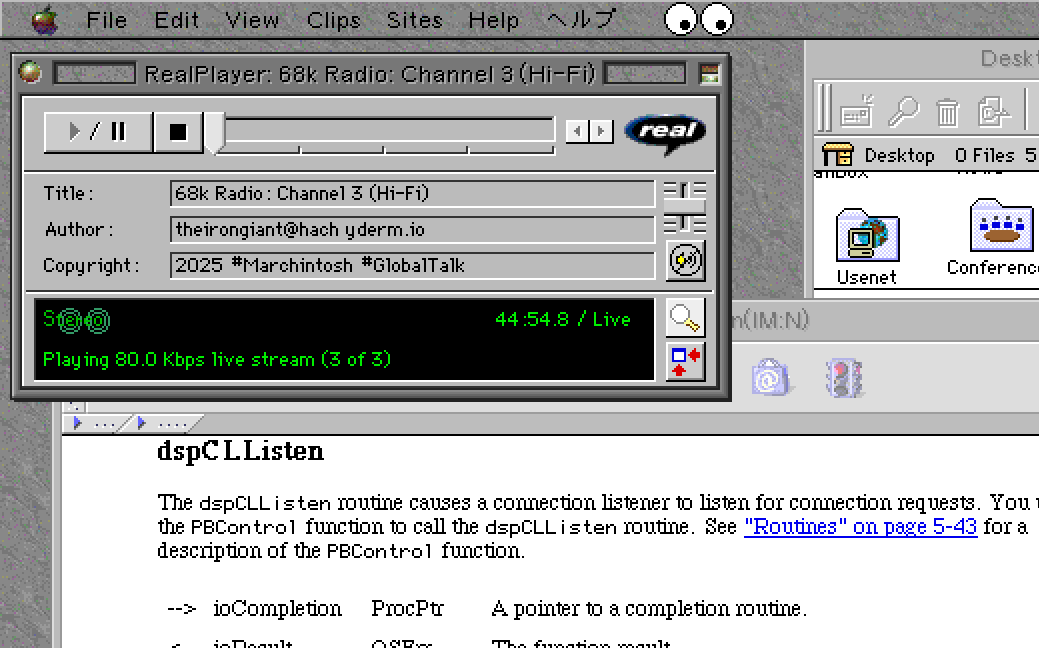
The video experience for typical video files is great these days compared to the past. I think you may be viewing the past through rose colored glasses. For years it was a pain to deal with video because you had to navigate third party players (remember Real Player?), Flash plugins, and sketchy codec pack installs from adware infested download sites. If you were tech support for friends and family during that era, it was common to have to remove adware, spyware, and other unwanted programs after someone went down the rabbit home of trying to install software to watch some video they found.
The modern situation where your OS comes with software to play common files or you can install VLC and play anything is infinitely better than the past experience with local video.
Local video could be a nightmare in 90s. I remember those days. I remember when it was revolutionary that the Microsoft Media Player came out, and you could use one player for several formats, rather than each video format requiring its own (often buggy) player. Getting the right codecs was still a chore, though.
MS Media Player eventually fell behind the curve, but eventually we got VLC and things got great.
> MS Media Player eventually fell behind the curve, but eventually we got VLC and things got great.
And in-between those we had Media Player Classic together with the Combined Community Codec Pack, and once you had MPC + CCCP installed, you could finally view those glorious aXXo-branded 700MB files found on a random DC++ hub.
It's insane that clicking on the video in the VLC interface does nothing. In every other app it is play/pause. There's a way to enable it deep in settings (or as a plugin?) but it should be the default.
VLC has fallen slightly victim to the “developer team tries to rebuild the entire product from scratch and still isn’t done with the rebuild but has stopped maintaining the original for like three years” issue that some software seems to have
That's awesome. I used VLC only because of the nightmare of codecs back in the day, and worked well for me for ages. I now just use mpv with some UI plugins.
I did drop MPC in favor of VLC, but with the new UI of VLC, maybe it's time to give MPC a try again. Didn't realize there was forks of it, time to do some rabbit hole diving!
> For years it was a pain to deal with video because you had to navigate third party players (remember Real Player?), Flash plugins, and sketchy codec pack installs from adware infested download sites.
How is this any worse than what YouTube does now? Real Player and flash never made you watch ads.
It seems you may be misremembering. From Wikipedia [1]:
> Past versions of RealPlayer have been criticized for containing adware and spyware such as Comet Cursor. ... PC World magazine named RealPlayer (1999 Version) as number 2 in its 2006 list "The 25 Worst Tech Products of All Time", writing that RealPlayer "had a disturbing way of making itself a little too much at home on your PC--installing itself as the default media player, taking liberties with your Windows Registry, popping up annoying 'messages' that were really just advertisements, and so on."
If you weren't using a Mac and wanted to play Quicktime videos? Then you have to install Apple's Quicktime player for Windows which was a piece of garbage.
I'm absolutely not viewing the past through rose colored glasses. RealPlayer was a dumpster fire, but that came later.
I could hold shift and drag on the timeline to select, copy, then paste it into a document or another video. I can't do that with VLC today. Apple removed the feature in later releases too.
What you’re describing with QuickTime was a proprietary nightmare that didn’t even work correctly across Apple products, let alone Microsoft or Linux.
Today with modern tools like VLC or MPV and ffmpeg nearly anything can be viewed, streamed, or locally saved by your average user with basic Google search skills.
And the number of free and paid video editing tools as far beyond what we ever had in the past.
Then there’s the vast improvement in codecs. It’s quite insane that we can have a feature length - 4k video with 8 channel audio in a 3GiB file.
The only problem about the modern world is streaming companies who purposely degrade the experience for money. And the solution is simply to fly the pirate flag high.
One issue GP may be referring to is the bifurcation of video viewing tools and video editing tools. There are excellent video editing tools: on the desktop from paid ones like Premiere to free (as in beer) ones like DaVinci Resolve, not to mention mobile apps behind the TikTok culture. There are also excellent and built-in video players in every browser and every OS.
But in the modern age viewing and editing a video are seen as two entirely separate tasks. You simply do not expect the video player that comes with the OS to cut, copy, and paste videos, even though cut, copy, and paste are basic OS-level features. This is very much different from the experience of almost all other kinds of files. You use Microsoft word to view and edit your word processing documents. Or if you aren’t fancy you use notepad to view and edit your plain text documents. These text documents easily allow cut, copy, and paste.
I think that happens when the rift between producers and consumers require some learning to jump from one to the other, at least professionally.
Some of the people who produce videos for a living require vastly different tools than someone who needs to trim the edges of a short home video clip, so the the UI and UX has to be different, otherwise these people won't be able to effectively do their job.
For writing, everyone pretty much does it the same way. You sit down, you enter characters with a keyboard, and sometimes to remove/edit stuff. Of course, there are professional tools for people who write stories for a living, that helps you keep track of arcs, characters, environments and so on, and many professionals do use them.
So while it looks like "Ah, Word actually works for everyone, why can't we do the same for video?" there are still professionals who need tools specifically for "writing stories" or "writing screenplays", and same in other areas :)
I used Avid VideoShop back in the day for that, which was Avid's consumer level offering. But I still appreciated being able to copy and paste from Movie Player when I just needed to paste a clip into a different application, which was much quicker when that was all I needed.
> But in the modern age viewing and editing a video are seen as two entirely separate tasks. You simply do not expect the video player that comes with the OS to cut, copy, and paste videos. This is very much different from the experience of almost all other kinds of files. You use Microsoft word to view and edit your word processing documents.
I think Word and other text documents are the exception not the rule. Image files have been pretty much always been viewed in different programs than the ones used for editing (although some viewers have rudimentary crop or rotate capabilities). Same with PDFs or PS files we alway view in something different than the editor. Nobody listen to audio files in e.g. Audacity.
In fact I can't even think about any other format except for docs where the editor is also the prime viewer (I suspect the reason is that originally consumption of docs was printing)
> What you’re describing with QuickTime was a proprietary nightmare that didn’t even work correctly across Apple products, let alone Microsoft or Linux.
This is such a deep misunderstanding of QuickTime that it's hard to know where to begin. QuickTime supported standards whenever possible, but you must know that QuickTime pioneered digital video and audio before open media standards were ubiquitous, and was in fact the blueprint (sometimes literally, see https://en.wikipedia.org/wiki/ISO_base_media_file_format) for today's standards. As a top-level history lesson, do yourself a favor and ask your favorite LLM, "What technology standards did QuickTime use and inspire?"
You may be "technically correct" (the best kind of correct), but holy je-BUS was QT NOT user-friendly nor cross-platform-friendly at the height of its popularity.
There's a reason that once alternatives became available, users left QT as quickly as they could.
QT was pioneering A/V solutions; I won't argue against that. So was Flash, so was Shockwave, so was RealMedia, and remember the horror that was Windows Media Player (from the Win98 era)?
Miss? I still used it just last week! Still haven't found anything that is as fast and easy to take a directory of frames in .png and concatenating them together into a proper video. I use it post 3D renders all the time :)
But I don't want more tools. I want to be able to view a video on YouTube, shift-scrub to select a short clip, hit copy, then go over to X, write some commentary, and hit paste. I don't want to have to go through yt-dlp, a dedicated video editor, and a file picker.
This functionality was taken for granted when video on personal computers were first invented.
You're not viewing the past with rose colored glasses. You're just viewing the past. We had simpler codecs with simpler computational complexities. Holding Shift and selecting a chunk of a video to copy was simple because videos were mostly a succession of independently compressed frames. Nowadays, we have forward- and backward- dependant frames, scene detection, and lots of other very advanced compression techniques.
There are whole projects striving to provide a reliable way to just cut videos without having to recode [1] and after years the results are mixed and only working for very specific codecs; no wonder Apple decided that doing the same, to their quality standards of the time, was not worth the effort or a secondary feature that was not in scope.
> Holding Shift and selecting a chunk of a video to copy was simple because videos were mostly a succession of independently compressed frames.
That was never true. QuickTime 1.0 famously included the Apple Video ("Road Pizza") codec, which had to do temporal compression in order to support video delivery at usable file sizes.
> There are whole projects striving to provide a reliable way to just cut videos without having to recode…
It's crazy how even today, VLC still can't scrub in an h264 video and even skipping around takes seconds for it to catch up while QuickTime Player (AVFoundation) can scrub around in realtime.
Early QuickTime was a miracle playing video on 25 MHz Motorola CPUs.
> It's crazy how even today, VLC still can't scrub in an h264 video and even skipping around takes seconds for it to catch up while QuickTime Player (AVFoundation) can scrub around in realtime.
I'm completely ignorant on this topic but couldn't this be related to patents?
Cinepak was one such codec and that could be arbitrarily seeked and copied just fine, even in the early 90s, if the player was competently implemented. It's just a matter of computing from the nearest keyframe.
What really happened was that the feature was first paywalled as QuickTime Pro, then removed altogether, in typical enshittification fashion. It had nothing to do with the technical limitations of any of the codecs.
And actually malware IMO. IIRC many of its installs were through tricks: silent installations with other software, drive-by downloads, etc. And once in, by fair means or fowl, it took over every video playing avenue whether you wanted it to or not, and it itself included other malware like Comet Cursor.
1991 was the vibrant, exciting, crazy "adolescence" of the PC age and well into the period where it was cool to have a desktop PC and really learn about it.
Phones are dominant now and have passed the PC generation by - in number, not capability. The concept of copy/paste/save for arbitrary data lives on for the non-tech masses only in the form of screenshots and screen recording features.
The thing that stands out to me looking back over a few decades is how much of consumer/public computing is exploring the latest novel thing and companies trying to cash in on it. Multimedia was the buzzword aeons ago, but was a gradual thing with increasing color depth and resolution, video, 3D rendering, storage capabilities for local playback, sound going from basic built in speaker beeps to surround and spatial processing. Similar with the internet from modems to broadband to being almost ubiquitously available on mobile. Or stereoscopic 3D, or VR, or touchscreens, or various input devices.
Adolescence is a very good word to encompass it, lots of awkward experiments trying to make the latest thing stick along with some of them getting discarded along the way when we grow out of them, they turn out not to be (broadly) useful or fashion moves on. What I wonder about is if the personal computer has hit maturity now and we're past that experimental phase, for most people it's an appliance. Obviously you can still get PCs and treat them as a workstation to dive into whatever you're enthusiastic about but you need to specifically go out and pursue that, where the ecosystem might be lacking is a bridge between the device most have as their personal computer (phone/tablet) and something that'll introduce them to other areas.
If it were a powerful, useful device that I could load my own software onto and make programmable without jumping through a bunch of hoops, instead of the ad-laden crapware that resulted from primarily two megacorps duking it out over how to best extort billions from app developers and users for their own benefit, then sure, I'd agree.
But phones aren't awesome little PCs, they're zombifying the majority of the public. They also, incidentally, are insidious little snitches busy at work trying to monetize every single thing about our daily lives.
> ut phones aren't awesome little PCs, they're zombifying the majority of the public. They also, incidentally, are insidious little snitches busy at work trying to monetize every single thing about our daily lives.
Yes, and corporations are doing all the same stuff to our PCs as well.
If you think having a developer mode switch on your smartphone that would enable shell access and a build env is what's stopping "the majority of the public" from "zombifying", either you need to talk with more "majority of the public", or I've been talking to the wrong "majority of the public".
The general public doesn't know how to program. They don't know what variables are, that they have types, they think functions are what rich people call a dinner party or corporate event. On computers, where there are no such restrictions, the majority of the public haven't suddenly become hobbyist programmers in their spare time.
If you're so blinded by hate because there are hoops (which there absolutely are), and you refuse to jump at all, not even a little bit, simply on principle, I mean, you do you. Meanwhile, there are people who aren't the majority of the public, but that want to do things that able to get into tech learning to code despite the epic of Apple vs Google vs Gilgamesh flattening towns. It would be great if it were easier because the phones were more open, but at some point you gotta go with the serenity prayer.
There's definitely a mismatch between expectations between what you inferred I meant and what I really mean. We agree that the majority of people are not going to suddenly stop being zombies if the platform were more open for development. It's a complex societal issue that's driven by the media atmosphere and the attention economy and affects all platforms. But smartphones are the platform that seems to be the most extremely affected and it definitely is accelerated by the locked down, content-consuming, ad-laden nature of everything the platform drives them to do. Nothing about the interaction mode of a touchscreen phone lends itself to being able to do deep work particularly well, but then on top of that all the platforms' incentives push away from it again.
> If you're so blinded by hate because there are hoops (which there absolutely are), and you refuse to jump at all
It's not necessary to bring that energy to HN and I'm going to nope right on at the point you accuse me of not being technical enough.
It's not a question of being technical enough. It's actually a question of being too technical. You're here, which for me garners youa base level of respect if only because I've had the creators of certain subjects of discussion have responded directly to me grousing here.
Because you're technical, the iOS restriction that code must be signed seems insurmountable, because it is. But if you know less about computers, you'd find bitrig or swift playgrounds or Pythonista. And knowing even less, you get into building web apps. For what people want to do and create; they don't know frontend from backend and are just getting their feet wet, a phone does alright.
Could it better at it? Absolutely, no question about that! But so could everything else in life. It depends on where on the spectrum you exist, A laptop is better than a phone for writing code for a lot of reasons, but when we're looking at the bigger picture, a phone is better than nothing.
> Phones are dominant now and have passed the PC generation by - in number, not capability.
And I'm saying phones have passed PCs in capabilities. Don't put words in my mouth, not all of them, obviously. I'm just pointing out that a desktop with a 5090 and 42" widescreen monitor doesn't fit in my pocket, and that fitting into my pocket is a capability that some people value.
Oh fuck you, I didn't have the $1,500 I just spent on Amazon for one of those! I've been waiting forever for them to make one with a finger print sensor, and I thought you were responding to a different comment so I looked it up and thank you :)
That's not remotely true. The only person I've ever seen in public using something like https://www.newegg.com/p/3C6-018V-01637 to STAND in line while using a laptop is me.
Depending on where personal/portable AI devices go, phones might be significantly different or not exist in 10 years as they do today.
There might be a resurgence of some kind of device like a PC.
Seeing iPadOS gain desktop features, and MacOS starting to adopt more and more iPadOS type features clearly shows the desktop, laptop and tablet experiences will be merged at some point by Apple at least.
I think it'd be biased more in the direction of the Ipad. If anything there's one feature apple's trying to avoid and that's Macos' waning ability to run third party binaries
There's a double edged sword here. Not even talking about DRM.
I would love to be able, myself, decide if it's fine to capture a screen for an application but I'd also would love to protect me or my non-tech-savvy relatives from accidentally share sensitive info (e.g. banking) when screen casting.
In my opinion there should be a waiver buried deep in the settings that allows me to disable such protections with a grace period of a week or so. Grace period is crucial because scammers are able to make people do virtually anything under stress and hurrying.
No, it's also iOS that's arbitrarily restricting it. I opened a bare .webm directly in Safari and got nothing on long press and nothing in any of the control widgets to save it.
A specific issue with video data is that it’s much denser: the same concept in video takes up more bytes than in text or image. Therefore hosting is more expensive, so less people host and the ones that do (e.g. YouTube) expect revenue. Furthermore, because videos are dense, people want to download them streaming, which means hosts must not just have storage but reliable bandwidth.
Even then, there are a few competitors to YouTube like Nebula, PeerTube, and Odysee. But Nebula requires a subscription and PeerTube and Odysee have worse quality, because good video hosting and streaming is expensive.
The real problem is that YouTube built a model where the platform, not the creators, controls the money flow. They could have charged creators directly for hosting and left monetisation up to them, but by inserting themselves as the middleman, they gained leverage and authority over content itself. The "cost of hosting" is just the technical excuse for such centralisation.
> They could have charged creators directly for hosting and left monetization up to them
A platform could do that today. I doubt such a platform would've beat YouTube even in the early 2000s. Creators can get almost the same experience by hosting their own site on a VPS.
There are lots of platforms where people pay for their distribution, but they're not as successful.
The main problem is that smaller creators couldn't afford the true cost of hosting and indexing to the level that YT provides.
As someone who's spent many years building streaming platforms, the lack of understanding of the economics and this kind of massive over simplification is really sad.
There's no conspiracy with YT, they've built a 'wonder of the world' which has a very low barrier to entry and which has paid out billions to creators.
I think companies always prioritized their own interests.
A company can increase its profits (1) by improving their products and services, so that they'll get more customers or customers willing to pay more, or (2) by increasing how much of their revenue is profit by (e.g.) cutting corners on quality or raising prices or selling customers' personal information to third parties.
Either of those can work. Yes, a noble idealistic company might choose #1 over #2 out of virtue, but I think that if most companies picked #1 in the past it's because they thought they'd get richer that way.
I think what's happened is that for some reason #2 has become easier or more profitable, relative to #1, over time. Or maybe it used not to be so clearly understood that #2 was a live option, and #1 seemed safer, but now everyone knows that you can get away with #2 so they do that.
We can have stable user-friendly software. We had a nice sweet spot in the early 2000s with Windows XP and Mac OS X: stable operating systems built on workstation-quality kernels (NT and Mach/BSD, respectively), and a userland that respected the user by providing distraction-free experiences and not trying to upsell the user. Users of workstations already experienced this in the 1990s (NeXT, Sun, SGI, HP, and PCs running IBM OS/2 Windows NT), but it wasn’t until the 2000s when workstation-grade operating systems became readily available to home users, with both Windows XP and Mac OS X 10.0 being released in 2001.
We do of course still have this in modern computing with Linux/KDE. Stable, snappy, and does exactly what you ask. The computer doesn't get in your way, nor does it try to get you to do something else. It just does what you tell it to do, immediately.
Yup, desktop Linux and other FOSS systems like ReactOS and Haiku are the last bastions of personal computing that haven’t been made into platforms that nag and upsell us.
> first version of Linux - which I did not have the honor to use but I can imagine how user friendly it was
My first accounts were on Linux 1.x. It was glorious. Simple, sensible, and with manuals one command away. And it allowed you to just get things done. And there were tools. So many tools. 80's home computers and DOS crap and Macs that couldn't even open a file if it hadn't been tagged as the property of some application... Hells I would never have to be a part of any more. Except for work and school. But for personal computing, a brighter future was coming. In 30+ years since I've never had to step away.
I remember when QuickTime came out in 1991 and it was obvious to everyone that video should be copied, pasted and saved like any arbitrary data.
I remember when VCR's came out and everyone would take TV shows and share them with their friends.
By now we should be able to share video on SD Cards that just pop into a slot on the top of the TV, but the electronics companies are now also the content companies, so they don't want to.
You can plug a USB drive with videos on into a lot of TVs I've encountered over the years. Due to limited container/codec support I rarely made use of it though.
I was just reading how ATSC 3 (over the air TV) is kind of stalling because they added DRM fairly late in the roll out. Several people bought receivers that are now incompatible.
Also, I'm not sure what the actual numbers are, but my impression is that a significant portion of OTA enthusiasts are feeding their OTA signals into a network connected tuner (HDHomeRun, Tablo, AirTV, etc.) and DRM kills all of these.
A media business is predicated on exclusive rights over their media. The entire notion of media being freely copied and saved is contrary to their business models. I think there's a healthy debate to be had over whether those models are entitled to exist and how much harm to consumers is tolerable, but it's not really obvious how to create a business that deals in media without some kind of protection over the copying and distribution of that media.
I think what breaks computer peoples' brains a bit is the idea that the bytes flying around networks aren't just bytes, they represent information that society has granted individuals or businesses the right to control and the fact technology doesn't treat any bytes special is a problem when society wants to regulate the rights over that information.
I have worked on computer systems for media organizations and they have a very different view of intellectual property than the average programmer or technologist. The people I find the most militant about protecting their rights are the small guys, because they can't afford to sue a pediatrician for an Elsa mural or something.
Experience with video is excellent for most people. All the complexity is hidden from the end user, unless you are trying to hack something. In the 1990s, streaming effectively didn't exist because people didn't have enough bandwidth (it was mostly dial-up), and there was very little legal offering, and the little that existed was terrible. Home video was limited too, as few people knew how to make video files suitable for online diffusion.
Piracy did pretty well, but that's because the legal experience was so terrible. But even then, you had to download obscure players and codec packs, and sourcing wasn't as easy as it is now. For reference VLC and BitTorrent released in 2001.
I'd say the user experience steadily improved and peaked in the mid-2010s. I think it is worse now, but if it is worse now, back then, it was terrible, for different reasons.
It took quite far into the 90's before things like truecolour displays and hardware accelerated video scaling appeared as well. Computers would struggle to view anything bigger than a postage stamp. Hard drive space was also really expensive. It started to change fast towards the end of the decade, though.
I mean, PeerTube is already halfway there. The problem is that it's a pain in the ass to host, last time I tried. Which sums up the whole problem as to why we have YouTube in the first place.
Guess why it was asymmetrical in the first place ... Telcos wanted to sell the upload bandwidth to streaming companies. Another double dipping Telco monopoly squeeze and customer boxing / enshitification from very early on.
Yes, I see Youtube going deep into enshitiffication. On my Macbook this morning with a FF-dev edition it just stopped to work this morning. Don't know if it's related to the fact I tried to install an extension to "force H264" on my Ubuntu box. On the latter fans started to go crazy as soon as I open a single youtube tab lately and a quick research led me there.
Actually at this point the only thing that makes the good old aMule a bit less inconvenient to my own expectations are
- it's missing snippet previews
- it doesn't have as many resources on every topic out there.
I also had it stop working completely. I thought they finally wised up to my adblocker, but I decided to finally install that update I had been sitting on for a while and it just started working again
Probably just the typical nefarious activities of YouTube. Either "accidentally" driving users to switch browsers, or experimenting with circumventing ad blockers, or negligence in testing, or who knows what.
If they want the "Google has no browser monopoly!" claim, then they should be obligated to make their services work perfectly with the alternative, instead of subtly scheming and manipulating people.
One thing you can do is to use an invidious instance. Those don't support live streams and shorts, but at least you don't have to deal with the atrocious normal YouTube frontend.
> It's absolutely insane to me how bad the user experience is with video nowadays
Has nothing to do with video per se. Normal embeddings, using the standard `<video>` element and no unnecessary JS nonsense, still work the same way they did in the 90s: Right click the video and download it, it's a media element like any other.
The reason why user experience is going to shite, is because turbocapitalism went to work on what was once The Internet, and is trying to turn it into a paywalled profit-machine.
I've always found it insane how much software development web sites are willing to undertake, just to avoid using the standard video, audio, and img HTML elements. It's almost hilarious how over engineered everything is, just so they can 'protect' things they are ultimately publishing on the open web.
Plain <video> elements are easy to download, but not great for streaming, which is what most people are doing nowadays. Much of the JS complexity that gets layered on top is to facilitate adaptive bitrate selection and efficient seeking, and the former is especially important for users on crappier internet connections.
I'm not a fan of how much JS is required to make all that work though, especially given the vast majority of sites are just using one of two standards, HLS or DASH. Ideally the browsers would have those standards built-in so plain <video> elements can handle them (I think Safari is the only one which does that, and they only do HLS).
I totally agree. And much of the JS complexity on smaller niche video sites aren’t even implemented properly. On some sites I just open developer console, find the m3u8 file URL and cookies in the request, and download it to view locally.
Browsers generally do allow native seeking if the video is properly encoded and the site supports such niceties as Accept-Range: bytes.
> still work the same way they did in the 90s: Right click the video and download it, it's a media element like any other.
I’m so confused reading these comments. Did everyone forget RealPlayer? Flash videos? All of the other nonsense we had to deal with to watch video on the internet?
RealPlayer was 1995, so a few years later, and arguably was a start of the trend of enshittification. Flash videos was around the times things really got bad.
Technically, you can profit off of ad revenue and subscriptions without exploiting the labour of your workers, so in this particular case it has nothing to do with the economic regime. Enshittification is its own thing.
The problem with a standard video element is that while it's mostly nice for the user, it tends to be pretty bad for the server operator. There's a ton of problems with browser video, beginning pretty much entirely with "what's the codec you're using". It sounds easy, but the unfortunate reality is that there's a billion different video codecs (and a heavy use of Hyrum's law/spec abuse on the codecs) and a browser only supports a tiny subset of them. Hosting video already at a basis requires transcoding the video to a different storage format; unlike a normal video file you can't just feed it to VLC and get playback, you're dealing with the terrible browser ecosystem.
Then once you've found a codec, the other problem immediately rears its head: video compression is pretty bad if you want to use a widely supported codec, even if for no other reason than the fact that people use non-mainstream browsers that can be years out of date. So you are now dealing with massive amounts of storage space and bandwidth that are effectively being eaten up by duplicated files, and that isn't cheap either. To give an estimate, under most VPS providers that aren't hyperscalers, a plain text document can be served to a couple million users without having to think about your bandwidth fees. Images are bigger, but not by enough to worry about it. 20 minutes of 1080p video is about 500mb under a well made codec that doesn't mangle the video beyond belief. That video is going to reach at most 40000 people before you burn through 20 terabytes of bandwidth (the Hetzner default amount) and in reality, probably less because some people might rewatch the thing. Hosting video is the point where your bandwidth bill will overtake your storage bill.
And that's before we get into other expected niceties like scrolling through a video while it's playing. Modern video players (the "JS nonsense" ones) can both buffer a video and jump to any point in the video, even if it's outside the buffer. That's not a guarantee with the HTML video element; your browser is probably just going to keep quietly downloading the file while you're watching it (eating into server operator cost) and scrolling ahead in the video will just freeze the output until it's done downloading up until that point.
It's easy to claim hosting video is simple, when in practice it's probably the single worst thing on the internet (well that and running your own mailserver, but that's not only because of technical difficulties). Part of YouTube being bad is just hyper capitalism, sure, but the more complicated techniques like HLS/DASH pretty much entirely exist because hosting video is so expensive and "preventing your bandwidth bill from exploding" is really important. That's also why there's no real competition to YouTube; the metrics of hosting video only make sense if you have a Google amount of money and datacenters to throw at the problem, or don't care about your finances in the first place.
Chrome desktop has just landed enabled by default native HLS support for the video element within the last month. (There may be a few issues still to be worked out, and I don't know what the rollout status is, but certainly by year end it will just work). Presumably most downstream chromium derivatives will pick this support up soon.
My understanding is that Chrome for Android has supported it for some time by way of delegating to android's native media support which included HLS.
Desktop and mobile Safari has had it enabled for a long time, and thus so has Chrome for iOS.
Any serious video distribution system would not use metered bandwidth. You're not using a VPS provider. You are colocating some servers in a datacenter and buying an unmetered 10 gigabit or 100 gigabit IP transit service.
Was RealPlayer really that horrible or was it just trying to do streaming media on an extremely low bandwidth connection without hardware accelerated and sophisticated codecs? I only really used it with a 28.8K modem netscape and Windows 95. The experience was poor but the experience viewing moderately sized images wasn't great either. I remember at the time encountering MPEG decoder add-in cards (that nobody used), although I suspect video cards started to add these features during the 1990s at some point.
I've gotten to experience using RealPlayer again this year[0] and... a lot of it was just it being really early but a lot of it was just the software being really bloated with adware and terrible design decisions. It asks for your home address when you install it, there are a bunch of ad panes you have to manually disable etc
I never bothered trying to stream anything, but I do remember downloading 20mb episodes of Naruto in surprisingly good quality due to the .rmvb format.
Left of center types have worked for decades on being ignored while right of center types are going through something of a resurgance right now after being rightfully relegated to the thrash heap of history and tend to feel persecuted if someone disagrees with them. For those right of center types freedom of speech seems to cut only in one way and it, unsurprisingly, evokes more disagreement. It must suck to be right of center.
Of course, that's another thing. The site is full of "down with the system" types which are, for some reason, oblivious to the irony of their values being aligned with the corporate values of businesses that have a valuation of trillions.
Once either of you present an argument worthy of respect within a civil and democratic society, I will respond in kind. Until then, statements like "the glorification of every other sexual special interest except the productive one" will continue to get the responses they deserve.
Of course only a pedophile would even think of having intercourse with a woman who has not yet entered menopause.
I should probably also get the lethal injection for being a product of such a sick and depraved congress, because apparently a child is guilty of the crimes of the father.
What if furthering the human species through the use of stable two-parent households happens to be my kink? You wouldn't kink shame, would you?
It will always be funny to me how little it takes for the mask of limitless tolerance to slip and reveal what you people think of those of us who dare even dream of deviating from the prevailing social norms.
What criticism, calling them "regressive troglodyte opinions" without any substantiation? You're not trying to have an argument, you're just trying to start a flame war.
ok, let me "hn-speak" what's already a clear position that you understand that i hold:
i think your views on women's roles are ridiculous, to the point of deserving hyperbolic comparison. your position is misogynistic, bigoted and repulsive to the ideas of self-determination, social equity, liberty, and nonaggression... summarized perhaps irreverently but not inaccurately by the phrasing "regressive troglodyte."
Why would you assume that someone who specifically mentioned "self-determination, social equity, liberty, and nonaggression" was advocating for "keeping women chained to their desks and away from children" through a lack of parental leave?
Because of the clear regressive biases evident in your comments: not once in your little diatribe nor the tedious back and forths since then have you mentioned general paid time off, bereavement leave, or even paternity leave. I don't want fathers to be chained to their desk and away from their children either, hence my use of "parental leave", but you seem only concerned about mothers being around their children. Isn't that interesting? That coupled with your "the glorification of every other sexual special interest except the productive one", spreading the bigoted lie that non-straight people are unproductive to society and there's little ambiguity on what you think women's role in society is.
I get this, but thankfully the regrettable tattoos I got back in the day were small/simple enough to hide under cover-ups. My former tattoos were drug-related, but these days, they're all themed with the retrovideo games I still love play, especially when I need a breather from everything else.
As a result, I am that guy that tells people a few rules about tattoos:
1. Don't get a tattoo of a band. They will eventually fall out of favor or do something stupid.
2. Don't get a tattoo of any person unless they've been dead for a long, long time. Like a band, a person will also eventually fall out of favor or do something stupid. Even after they're dead, it may still be uncovered that they did something stupid in secret.
3. Don't make your self-expression about other people. Rules 1 and 2 should have already put you on this path.
4. Consider time. So you like cars, especially the 1987 Pontiac Firebird you had in high school. Have you always liked cars? Will you always like cars? Have you and will you always like that car? If there is doubt, rule it out.
5. Are you drunk or high? Best sleep on it.
6. Can you be honest with yourself? This is the Catch 22 question, but an important one. We tend to have a few versions of ourselves to contend with; the one we want to be, the one others perceive us as, and the one we need to be. Sometimes they align, sometimes they don't, but self-expression hinges on understanding the difference and allowing that we might be deceiving ourselves about who we really are, sometimes.
Getting a tattoo is a remarkably difficult and personal thing that I see a lot of people not take seriously enough, then live to regret it, myself included. The artist who has now done all my visible work is an absolute master at getting people to slow down and think about what they want, which was a terrific boon in my life, because he probably did more for me as a person than my therapist did. His clients are life-long, one even having traveled from another country to get more work done by him. That's to say nothing of his absolutely radical art and style that always produces something unique and fit for the person to make part of their lives.
It's something I often think about when I look down at my arms, see those old game homages and realize, regardless of what else has happened in my life or whoever I thought I was at the time, they have been with me since the beginning and are still here, helping me through it.
i like and agree with all of this, with one extra dimension: i've challenged myself throughout my life to view my (almost entirely stupid) tattoos as a memory reference for where i was at in my life at the time. rather than regret them (with one exception, which i've since blasted over with a solid black box as a different type of reminder), i can gauge my own growth against them and appreciate that while i'm still a huge idiot, i'm at least getting a little better day by day :) plus, my memory is pretty bad, so having a few material reminders of my past helps jog some good (and occasionally bad) memories that contribute subconsciously to who i've become as a person. thanks for posting this!
That's a great way to look at it, sort of like the idea of cutting notches in a door frame to keep track of your growth as a kid (not something my mom did, but I see it referenced a lot in movies and tv). It's good to remember where we came from, how we've evolved and recognizing that we are perhaps stronger for it.
If I carefully had a favorite thing of mine selected, and I woke up tomorrow with the tiniest tattoo of it, I would be so upset. I’d be bothered every time I saw it on my body, knowing it wouldn't rub off.
I bet your tattoo artist could help me learn something about myself there :)
There’s also the problem with both most tattoos and all the stickers in the article that there’s nothing left that’s counter-cultural about them, which defeats the entire purpose of doing something edgy as a statement.
I'm seeing a lot of cute animals, memes, video game stuff, what's with the fixation on being edgy. My gf has a bunch of animal tattoos, doesn't need to be complicated.
Because then it's just visual clutter, and in the case of tattoos, unnecessary pain, expense and health risk.
If I'm going to put a sticker on something it's going to read like a diff, what sets me apart from the mainstream culture, not all the different ways I conform to it.
My first tattoos were each done years apart. I printed a version out, put it in my wallet, and saw it every time I made a purchase. If I still loved it just as much a year later, I booked an appointment.
Later tattoos are essentially private works of art, put together collaboratively with an artist. These are for ME, and no one at work will ever see any of them (or any of my other tattoos).
Each tattoo has some significance for me, but I won't judge others who just like a thing and get a thing. Tattoos are as varied as the reasons people have for getting them. Mine aren't edgy, but they also aren't visible to strangers.
I don't mind sharing, but the point remains, they're for the person wearing them. Enjoy them, in public, or in private. They're yours to do with as you wish.
But you can also use them as a reminder of how you felt/who you were when you got them.
Even someone who get a very trendy tattoo should keep it: "look how I used to follow every trend and how I evolved because I would never do something like that now".
Biologically and philosophically, tattoos are scars.
> Getting scars on purpose is a quite questionable decision.
Interesting. Why?
Isn't it a common and longstanding cultural practice, even among indigenous peoples? Intuitively, I'd say body modification is based on the desire to shape one's own body, something we usually embrace in fitness culture and medicine, for example.
I don't have any tattoos or scars, but I can't think of anything that would make them questionable.
Perhaps some of the objection arises from a confusion between body modification and self-harm?
Just because something has been done for a long time doesn't mean it's good. We also shouldn't confuse self-mutilation with healthy activities like exercising simply because both "shape one's own body".
> Just because something has been done for a long time doesn't mean it's good.
This is true, although it is a good start, right? If a cultural practice has survived for many generations, this alone already indicates that the practice might be compatible with human society, morals, sustainability, etc.
> We also shouldn't confuse self-mutilation with healthy activities like exercising simply because both "shape one's own body".
True! We should indeed not confuse self-mutilation with healthy activities just because they share some similarities.
But would you classify scars or tattoos motivated by aesthetics as self-mutilation? What about piercings, such as holes for earrings or laser hair removal?
I believe that is an interesting and unusual position. Do you have an argument in favor of your (so far implicit) take?
> If a cultural practice has survived for many generations, this alone already indicates that the practice might be compatible with human society, morals, sustainability
Does it? This sounds like a disingenuous take that doesn't even pretend to bother with reality.
> But would you classify scars or tattoos motivated by aesthetics as self-mutilation?
Disingenuous question - the person you're replying to called you out for very obvious collating of body mutilation and fitness/medicine.
I made a kinky interpretation and apparently I'm wrong.
The white label with the "Haltungsform" is a standard label used in the German meat industry, showing under what conditions animal was kept before being slaughtered. 1 is the worst, and 5 is the best: https://haltungsform.de/en/
In this one, it says "Käfighaltung" under 2. Which means "caged keeping". So I assumed it's a kinky reference to a chastity cage. Maybe too much of a jump I know but I'm not a native German speaker and all the times I heard about a cage in German, it was in a kinky context.
This is a good argument against getting them on impulse, or cheaply. Find a good artist whose work you can appreciate, pay them well, and you keep some art that will be with you forever.
I would like to know which stickers they were. Maybe I would recreate a few for irony. There are plenty of candidates for irony, from Enron to crypto. There are also those companies that it is hard to be excited about - I mean a Microsoft sticker would mark you out as a rebel.
Oddly, the only stickers I have on my computers are the Intel ones that come ready applied. Younger me would have gone in for stickers but younger me had pen and paper with no laptop. That said, back then it was school bags that got decorated, albeit with fabric patches and badges rather than stickers. Here was how you showed allegiance to music bands and football teams. I didn't do that though since I was not one of the cool kids.
One sticker set I would like consists of morally dubious companies such as defence corporations and failed companies from things such as crypto, mixed up with USAID psyops such as 'Free Tibet'. However I can't be bothered to put in the work. That is why stickers that are ready made succeed, it is minimal effort.
Younger me was surprised at how much stickers cost. When I was working in a bicycle shop we had Oakley sunglasses for sale, and the product was cool. In period people would buy Oakley stickers from us to put them in the back of their car. I expected these to be freebie promotional items but no, they cost a fortune and could not be just given away.
Stickers are like statues of people, or streets named after people. They don't age well. Nothing and nobody is absolutely right, all the time or in hindsight.
I have one on my laptop that says "Fuck Your Algorithm." It's like a fine wine that gets more potent by the week, but it's about as political as my stickers get. The rest are just cool art I enjoy, usually from artists I meet at street fairs and whatnot, since it's an easy way to throw them a few supportive bucks without breaking my own wallet.
Saying they don't age well is pretty generalizing, given the variety of ways one can express themselves with stickers that aren't necessarily topical or political.
Theres better ways to choose stickers. Make them yourself and it's extremely unlikely you'll ever be at odds with that artist ;). Pretty art or ubiquitous fun phrases generally also don't really go bad, unless it's so tied to a specific artist that it represents them too.
I have a similar project to this one, and for some time I felt exactly the same. It's not so active anymore anyways, but yea the big tech logos have at least a bitter taste to them.
Wouldn’t the opposing view imply that you are allowed to have political opinions, but only as long as you go at it alone and don’t organize too much with others?
For all I know that might indeed be a better way of running society, but that’s definitely going to take a big constitutional amendment.
The real issue is not so much the speech, but that money is considered speech in the US, so Citizens United apparently gives corporations the right to donate to political campaigns. A lot of people would like to stop that channel for corruption.
In the post I mentioned that there are people in the UK painting the St George cross on roundabouts, and some like the protester who was interviewed in one of the links talking about having the UK be for "white people".




Are they accompanying their wives, end up fainting during the procedures, hit their heads and have to be patched up?